
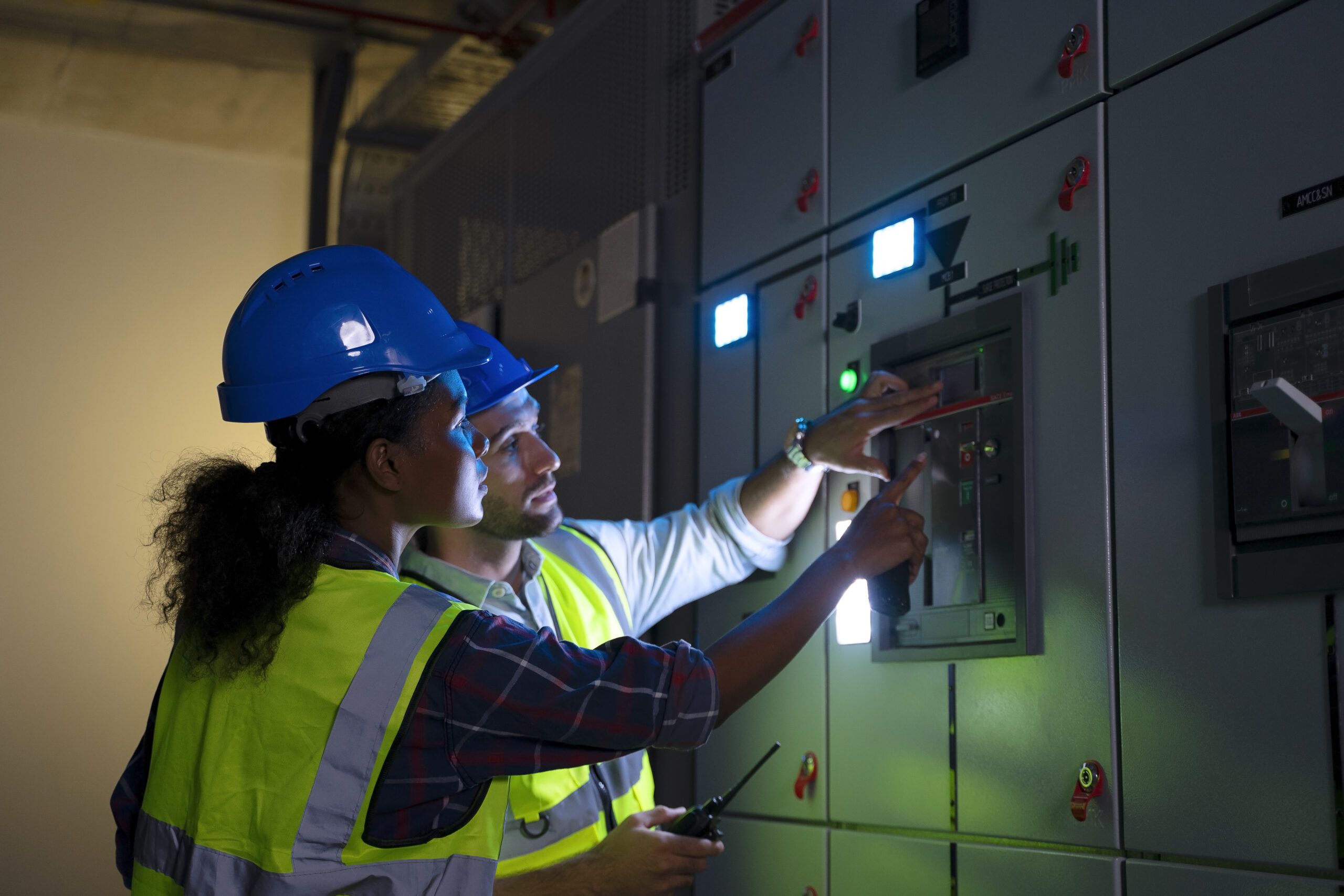
It’s 2 AM, your main transformer trips, and suddenly you’ve got a control room full of alarms, operators scrambling, and a process heading toward uncontrolled shutdown. The difference between “minor inconvenience” and “catastrophic event” comes down to what happens in the next 60 seconds and whether your team knows what to do.
Electrical failures cascade. A single breaker trip can take out your DCSA distributed control system is an integrated automation platform that monitors and controls industrial processes through networked controll... (Distributed Control System), trigger safety system activations, strand rotating equipment mid-process, and create personnel hazards that didn’t exist five minutes ago. Arc flash incidents can cause severe burns through standard work clothing. Process upsets can take 8-12 hours to recover from. Equipment damage can run from tens of thousands to hundreds of thousands of dollars.
This industrial electrical safety guide covers immediate response actions, team coordination, restoration procedures, and documentation to help satisfy regulatory requirements. Whether you’re developing a new power outage emergency plan or strengthening existing procedures, the framework here addresses the gaps most industrial facilities discover only after an incident.
The content draws on 40 years of electrical engineering experience across petrochemical plants, mineral processing facilities, power generation sites, and emerging sectors such as carbon capture.
Disclaimer: Emergency procedures must be tailored to specific facility configurations and regulatory requirements. Codes and standards (including CSA Z462, NFPA 70E, and OSHA requirements) are updated periodically. Verify all information against current versions, your facility’s emergency response plans, and qualified engineering guidance. Regional regulations vary significantly. Standards and regulations vary by jurisdiction. For Canadian projects, refer to CSA Z462 and APEGA guidelines to ensure compliance.
Do Your Electrical Emergency Procedures Reflect Your Actual Equipment and CSA Z462 Requirements?
Talk to Vista’s Electrical Engineering Team
Understanding Electrical Breakdown Types
Before responding effectively, you need to understand what you’re dealing with. The response appropriate for a motor trip is completely wrong for an arc flash event.
Power Supply Failures
Utility outages tend to be clean. Everything goes dark at once, the transfer switches activate, and you shift to your emergency plan. Internal distribution failures are messier. You might lose one MCC (Motor Control CenterA Motor Control Center (MCC) is a floor-mounted electrical assembly that groups multiple motor control units, commonly including motor start...) while other equipment keeps running, creating partial outages that confuse operators.
What still has power and what doesn’t? Your SIS (Safety Instrumented System) probably has a dedicated UPS backup providing 15-30 minutes of runtime. Emergency lighting should activate within seconds. But that critical cooling water pump might have no backup at all. If you don’t have a one-page power hierarchy diagram posted in the control room, make one this week.
Motor and Drive Failures
A small cooling fan trip might give you 15-30 minutes before problems develop. A pump motor failure on a critical cooling loop might give you only a few minutes.
Warning signs before complete failure: unusual vibration, bearing noise audible at a few feet, or current draw creeping upward over weeks. Many facilities use vibration thresholds around 0.3 in/sec as an investigation trigger, though your program may use different criteria. These observations often precede failure by days or weeks, long enough to schedule controlled maintenance. Proper motor testing before startup establishes baseline measurements that make these warning signs easier to identify.
Variable frequency drives add complexity. Fault codes on the drive’s local display tell you far more than generic DCS alarms. “DC bus overvoltage” points toward specific causes. “Motor 101 Fault” tells you nothing useful.
Switchgear and Arc Flash Hazards
Arc flash events rank among the most dangerous industrial situations. In 480V equipment, incident energy can reach 20 cal/cm² or higher, depending on fault current and protection speed. Temperatures at the arc point can be extreme. The pressure wave from vaporizing copper can cause serious injury beyond the thermal boundary. These events develop and clear in a fraction of a second. Ensuring CSA Z462 compliance requires site-specific incident energy analysis and appropriate PPE selection.
Industry data suggests thousands of workers receive treatment for electrical burns annually in North America. Specific incident energy levels should be determined through engineering analysis for your equipment.
Warning signs warranting immediate attention: changes in transformer sound, oil leaks around transformer bases, or temperature readings approaching nameplate limits.
Control System Power Failures
When your DCS or PLCA programmable logic controller is a ruggedized industrial computer designed to execute discrete and sequential control logic for machinery ... loses power, what happens depends on system design. Good designs have fail-safe states defined for every control loop. Control valves with spring-return actuators fail to their safe position within seconds of losing air. Motor starters drop out immediately.
The critical question: Does your SIS have dedicated UPS power truly separate from DCS power? If they share a common UPS, that’s a vulnerability worth understanding now.
Vista’s integrated approach to electrical and I&C engineering exists because these systems are interconnected. That MCC fault might take out I/O cards powered by the same source, leaving operators in the dark about field conditions.
SCADA software with robust alarm management helps operators distinguish critical failures from nuisance alarms during power events.
Hazardous Area Considerations
Electrical emergencies in classified hazardous locations (Class I Division 1 or 2 areas, or Zone 0/1/2 under IEC standards) require additional precautions. Equipment designed for hazardous areas may have different isolation requirements. Portable test equipment must be rated for the classification. Hot work permits may be required even for electrical troubleshooting if the area contains flammable atmospheres.
Your facility’s area classification drawings should be part of emergency response documentation. Responders need to know whether they’re entering a hazardous location before they arrive with standard tools.
Immediate Response Actions
The first 30-60 seconds set the trajectory. A good initial response contains the situation. Poor response turns a manageable problem into something much worse.
Personnel Safety
Before thinking about process or equipment, assess danger. Is anyone injured? Is anyone near the fault location? Is there fire or smoke?
Don’t rush into energized areas to attempt rescue. Electrical incidents frequently involve secondary victims. If someone contacts an energized conductor, de-energize the circuit first. Don’t touch them until power is confirmed off.
Once safe, first aid priorities focus on cardiac effects and burns. Current through the torso can cause cardiac arrest or arrhythmias, sometimes appearing hours later. Arc-flash burns often appear less severe than they are, with significant tissue damage beneath the surface. Call emergency medical services promptly for any electrical contact injury.
Containing Electrical Fires
Electrical fires require Class C extinguishers, specifically CO2 or dry chemical. Water on energized equipment creates a conductive path.
If you can de-energize first, do it. CO2 extinguishers work at close range but discharge quickly. Dry chemical is more effective on larger fires but leaves corrosive residue.
Individual response makes sense for small, contained fires caught immediately. Anything spreading beyond initial equipment, producing heavy smoke, or reaching overhead requires your fire response team.
Oil-filled transformers can contain hundreds of gallons of oil that burns intensely. These typically require a professional response.
Initial Communication
Alert others immediately with short, clear messages: “Electrical fault in Building 4 MCC room, evacuate immediately,” or “Arc flash injury in Substation 2, need medical response.”
Notify the control room, operations supervisor, on-shift electrical personnel, and security within minutes. Electrical supervisors, operations managers, and safety personnel should be promptly notified of significant events.
Integrating with Facility Emergency Plans
Your electrical emergency response should align with your facility’s overall emergency response plan. Electrical incidents can trigger other emergency conditions: fires, chemical releases from failed containment systems, or environmental impacts from cooling system failures.
Know when an electrical emergency escalates to a facility-wide emergency. Establish clear criteria: any injury requiring medical transport, any fire beyond the incipient stage, any process safety event triggered by electrical failure, or any release to atmosphere or environment. When those thresholds are crossed, the electrical emergency becomes part of a larger response structure with different command authorities.
Emergency Response Team Coordination
Ad-hoc response rarely works. When nobody knows who’s in charge, decisions don’t get made, and manageable outages stretch much longer than necessary.
Essential Roles
Incident Commander: Makes decisions and coordinates overall response. Needs to stay calm, decide, and delegate effectively.
Electrical Lead: Provides technical expertise. Knows where feeds originate, what interlocks exist, and where isolation points are located.
Operations Liaison: Bridges electrical response and process operation. Knows which pumps stop when Bus 4 goes down and whether the process can tolerate that.
Safety Officer: Ensures response activities don’t create new hazards.
Decision authority: The Safety Officer has final say on personnel safety. The Electrical Lead makes technical decisions. Incident Commander decides overall strategy. Work this out during tabletop exercises.
Information Flow
Control rooms have information field teams don’t: trending data, alarm sequences, and what happened leading up to the event. Field teams see things control rooms can’t: actual equipment condition, sounds, smells, visible damage.
Establish communication protocols that keep both perspectives connected. Regular check-ins every 10-15 minutes during active response. Immediate notification of any safety concern or significant finding. Clear protocols for who talks to whom. Facilities with remote SCADA monitoring capabilities can access this critical data even when the control room is affected by the outage.
External Resources
Contact your utility for events affecting their equipment, extended outages, or anything at your service entrance. Specialty contractors may be needed for medium voltage work, major repairs, or relay testing. Response times and costs vary by region, so establish relationships beforehand.
Call emergency services immediately for any injury, any fire beyond portable extinguisher capacity, or any uncertain situation. Better to call and cancel than delay too long.
Lockout/Tagout During Emergencies
LOTO procedures exist because people have died from unexpected energization. Emergency conditions increase risk because everyone’s rushed. Core requirements don’t change: identify all energy sources, notify affected personnel, isolate, apply locks and tags, verify zero energy, document everything.
What can change is timing. You might implement isolation first and catch up on documentation afterward. You still need to complete the documentation.
Critical Requirements
Three things you cannot skip:
- Identifying and isolating all energy sources, including non-obvious ones
- Verifying zero energy state through actual testing
- Physical locks on isolation devices
Verifying Zero Energy
Use Live-Dead-Live testing: verify your meter works on a known energized source, test your target circuit, then confirm your meter still works. This catches dead batteries and failed leads.
Remember stored energy. Capacitors in VFDs can hold dangerous voltage for several minutes. UPS batteries keep energizing equipment with an AC isolated. Generators can backfeed through transfer switches.
Complex System Isolation
Industrial facilities often have interconnected systems where isolating one component requires coordinating multiple isolation points. Develop isolation maps for critical equipment showing all potential energy sources. During emergencies, these maps prevent the delays that come from tracing circuits under pressure.
Track isolation status in real time. Large facilities use isolation tracking boards or software. Smaller facilities can use paper logs. The method matters less than the discipline of recording every isolation and ensuring everyone knows the current status.
Emergency Power Activation
Backup power systems have real limitations. Understanding them beforehand determines whether the response stays controlled.
Generator Startup
Quick pre-start checks matter. Verify oil level, coolant level, adequate fuel, and battery voltage. A generator that fails partway through the emergency is worse than a brief delay for verification.
If auto-start doesn’t engage within 30 seconds, check: transfer switch position, generator control not in “auto,” emergency stop engaged, or protective alarms blocking start.
Load Management
Load prioritization matters. Life safety loads first (emergency lighting, fire systems, SIS). Process safety loads second (critical cooling, instrument air, control systems). Production loads last.
Bring loads on gradually. Large step changes can trip protection or stall the generator.
Know your generator capacity and current loading. A common emergency failure mode: operators add loads without tracking cumulative demand until the generator trips on overload. Post load limits at the generator and track additions.
UPS Management
Know what you can shed to extend runtime. Safety systems stay powered. Control systems shed last. Convenience loads go first.
Monitor UPS status actively during outages. Battery runtime estimates assume the current load continues. Adding loads shortens the remaining time faster than the display suggests.
Fuel Planning
Have enough fuel for extended operation. Start arranging delivery well before running low. Keep supplier emergency contacts posted at the generator.
For extended outages, calculate fuel consumption against remaining supply at regular intervals. A generator running at high load consumes fuel faster than nameplate ratings suggest. Build margin into your calculations.
Troubleshooting During Emergencies
You need to understand what happened to fix it, but you also need to manage the immediate situation. These happen in parallel.
Quick Cause Identification
Start with protective devices. Relay targets, breaker trip indicators, and fault codes provide direction. Ask operations what conditions existed before the fault. Was the motor starting? Had the load increased?
Preserve evidence: photograph damage before repairs, download relay event logs before they’re overwritten, and set aside failed components.
Sometimes stabilizing comes first. If you can shift critical loads to a healthy bus, do that. Detailed investigation can wait.
Diagnostic Safety
All diagnostic work requires appropriate precautions. De-energize equipment before testing whenever possible. When energized testing is necessary, use properly rated equipment and appropriate PPE. Keep non-essential personnel clear.
Thermal imaging can identify hotspots from a safe distance. Insulation resistance testing (megger testing) should be performed before re-energizing any equipment that may have been damaged. Your facility should have specific acceptance criteria for insulation resistance based on equipment voltage and type. After restoration, verify that critical instruments are still within calibration before returning to normal operations.
Common Failure Patterns
Overcurrent trips: Instantaneous trips indicate high-magnitude faults. Look for failed insulation or damaged cables. Time-delay trips suggest sustained overload. Check for mechanical binding or cooling loss.
Ground faults: Usually, insulation breakdown occurs from moisture, aging, or mechanical damage. Often starts intermittently before becoming solid.
Phase imbalance: Causes excessive current on remaining phases. Check connections, fuses, and upstream devices.
System Restoration
Getting power back requires more than flipping breakers. Careless re-energization creates new failures.
Pre-Energization Inspection
Inspect for visible damage, including burn marks, melted components, and discoloration. Test cable and motor insulation with a megger. Your maintenance procedures should specify acceptable values.
Don’t re-energize equipment showing overheating signs, arcing evidence, failed insulation testing, or contamination.
Check downstream before energizing upstream. A fault that hasn’t been cleared will trip protective devices again, potentially with more damage.
Restoration Sequence
Plan your sequence from source toward loads: utility or generator first, then main switchgear, then distribution, then MCCs, then individual loads.
At each switching point: confirm isolation status, alert personnel, close the device wearing appropriate PPE, verify voltage appears correctly, and watch for 30-60 seconds. Stand to the side of the switchgear.
Stop immediately if a breaker trips on closing, if you see smoke, or if anything seems abnormal. Investigate before retrying.
Process Equipment Restart
Coordinate with operations. They need to know what’s coming online. Some process equipment has specific startup sequences that must be followed regardless of electrical readiness.
Control systems may require manual intervention after power restoration. DCS and PLC programs typically resume from their pre-outage state, but I/O may need acknowledgment, interlocks may need reset, and process variables may have drifted outside normal ranges.
Variable frequency drives often require specific restart procedures. Some clear faults automatically occur on power restoration. Others require a manual reset. Know your equipment.
Documentation and Continuous Improvement
Once the emergency ends, work remains: preventing the next one.
Event Documentation
Capture during the event: timeline, actions, observations, decisions, personnel. Photos, voice memos, and notes all work. Capture details while memories are fresh.
Preserve evidence: failed components, damage photos, relay logs, and control system data.
Document decisions and their rationale. During investigations, understanding why certain choices were made often matters as much as what was done.
Regulatory Reporting
Reporting requirements vary by jurisdiction. OSHA generally requires prompt notification of fatalities and serious injuries. State and provincial requirements differ. Environmental releases may trigger separate reporting. Consult compliance personnel when uncertain.
Your facility should have a regulatory notification checklist that’s part of emergency response materials. Don’t rely on memory for reporting deadlines when you’re exhausted after a long incident response.
Investigation
Keep asking “why” until reaching something actionable. “The motor tripped” isn’t fixable. “The maintenance schedule wasn’t followed” is fixable.
Focus on systems rather than individuals. “The procedure was confusing” leads to improvements. Blame discourages honest participation.
Include near-misses in your investigation program. Events that almost caused harm reveal the same system weaknesses as actual incidents, with less damage and lower stakes.
Procedure Updates
Update procedures when investigations reveal gaps. Communicate changes to everyone affected. Conduct refresher training on significant changes.
Track procedure effectiveness over time. If the same types of incidents keep occurring despite procedure updates, the procedures may not be addressing root causes. Or they may not be followed consistently, which points to different improvements needed.
Prioritize investments based on risk: severity, likelihood of recurrence, cost, and whether fixes address root causes.
Building Electrical Emergency Resilience
Effective industrial electrical safety and emergency response comes down to preparation, clear execution, and honest learning afterward. Facilities that handle emergencies well have practiced their response, their people understand roles, and their procedures reflect actual equipment.
Your electrical emergency procedures should integrate with your overall facility emergency plan, not exist as a separate document that nobody remembers during a crisis. Response team members need cross-training so they understand how electrical failures affect process operations and vice versa.
Look at your current procedures. Do they describe your actual equipment or generic templates unchanged for years? Have operators walked through them recently? Do documents reflect lessons from past incidents? Do they address hazardous area classifications where applicable?
If any answers feel uncomfortable, that’s your starting point.
Vista Projects brings four decades of integrated engineeringThe process of integrated engineering involves multiple engineering disciplines working in conjunction with other project disciplines to exe... experience across electrical, I&C, process, and mechanical disciplines. We design systems with emergency scenarios in mind: appropriate isolation, properly sized backup power, and protection schemes that coordinate correctly. Our work spans 13 energy markets from Calgary to Houston to Muscat.
Design Electrical Systems That Contain Failures Before They Cascade
Schedule an Electrical Engineering Consultation with Vista Projects
This guide is for informational purposes only and should not be considered engineering, safety, or regulatory advice. Regulations and practices change. Always consult qualified professionals, your facility’s emergency response plans, and current codes. Individual facility conditions vary significantly.