
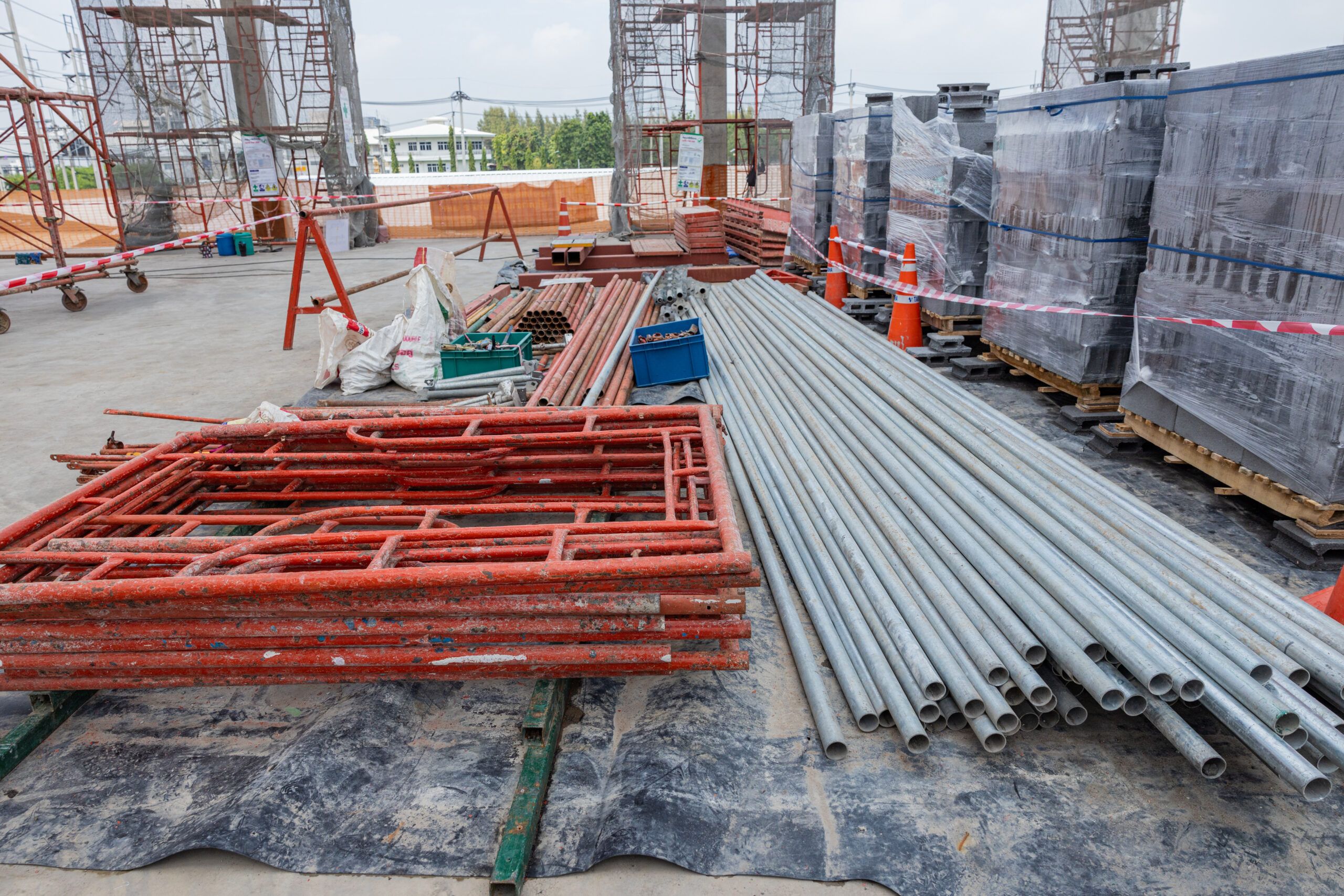
Material selection decisions made in the first 10% of a capital project lock in 80% of the total cost. Yet many engineering teams default to whatever they specified on their last project. That’s not engineering. That’s a habit. And habit costs money. Rework due to mismatched material specifications can cost tens of thousands to hundreds of thousands of dollars per incident on industrial projects. Schedule delays from unexpected 16-20 week lead times add high weekly costs in contractor overhead. Maintenance headaches compound at several percentage points of capital cost annually for decades. When civil construction materials get selected in isolation from structural, mechanical, and process engineering requirements, someone’s going to pay for that disconnect later. Usually, the owner.
Material costs, availability, and regulations change frequently. Verify current information with local suppliers and authorities before specifying materials for your specific project.
Professional Practice Notice: This guide provides general educational information about civil construction materials for industrial engineering projects. Certifications and licensure requirements vary by jurisdiction. In Alberta, engineering practice is regulated by the Association of Professional Engineers and Geoscientists of Alberta (APEGA) under the Engineering and Geoscience Professions Act. Engineering work must be performed or supervised by a registered Professional Engineer (P.Eng.). Other Canadian provinces and territories have similar requirements through their respective engineering regulatory bodies. Always consult with qualified, registered professional engineers for project-specific engineering decisions.
This guide covers the primary categories of construction materials used in industrial engineering projects, including concrete systems, structural steel, aggregates, and geotechnical materials. We’re not doing the standard “here’s what concrete is” content you’ll find everywhere else. Instead, we focus on selection criteria that actually matter: specific ASTM and CSA material specifications, performance characteristics for industrial environments, sustainability implications with real carbon reduction percentages, and a decision framework that connects construction material choices to total cost of ownershipThe total cost of ownership refers to the total cost of owning an industrial asset throughout its full lifecycle, from design and construc.... If you need to justify a specification to a project manager or defend a material substitution to an owner, this is the reference you want.
The pressure to reduce carbon footprint while controlling costs has made material selection more complex than it was even five years ago. Embodied carbon specifications have become increasingly common in major Canadian industrial RFPs, growing significantly from pre-2020 levels. Supplementary cementitious materials, high-performance concrete formulations, and weathering steel alternatives give project teams more options. But options require knowledge. Vista Projects brings over 35 years of integrated engineeringThe process of integrated engineering involves multiple engineering disciplines working in conjunction with other project disciplines to e... experience to material selection, ensuring that civil engineering materials align with structural, mechanical, and process engineering requirements throughout industrial project lifecycles.
Understanding Civil Construction Materials in Industrial Projects
Civil construction materials for industrial projects differ significantly from those used in residential or commercial buildings. Industrial applications involve higher loads (equipment foundations handling 50,000+ kg versus residential footings at 5,000 kg), harsher environments (chemical exposure, temperature cycling from -40°C to +40°C in Alberta), longer design lives (50 years minimum versus 25 years residential), and tighter integration with process equipment. This guide covers infrastructure construction materials for petrochemical facilities, mineral processing plants, power generation, pipelines, and similar capital projects where “good enough” doesn’t cut it.
The major categories of civil works materials break down into four groups: concrete and cementitious systems (foundations, containment, elevated structures), structural steel systems (frameworks, supports, connections), aggregate products (concrete ingredients, structural fills, drainage media), and geotechnical materials (ground improvement products, engineered fills, foundation interfaces). Each category has its own material specifications, testing standards, and selection considerations, which we’ll cover in detail below.
Why Civil Material Selection Affects Other Engineering Disciplines
Civil material decisions cascade through every other engineering discipline on an industrial project because foundation design, structural framing, and site development create the physical constraints that mechanical, piping, and electrical systems must work within. Choose a foundation system without consulting the mechanical team on equipment vibration requirements (typically 0.05-0.10 mm/s velocity limits for rotating equipment), and you’ll have to redesign the foundation later, adding 4-8 weeks to your schedule. Specify structural steel grades without understanding the piping engineer’s pipe support loads (often 2,000-10,000 kg per support), and you’re issuing change orders within 3-4 months of construction start.
Total installation cost (TIC, meaning the complete cost to build and commission a facility) and total cost of ownership (TCO, meaning TIC plus all operating and maintenance costs over the facility’s life) aren’t just accounting metrics. TIC and TCO are the direct consequences of how well you integrated material selection across disciplines from the start. We’ll explore the decision framework for this integration in detail later in this guide.
Concrete and Cementitious Materials: Specifications and Selection
Concrete remains the most widely used civil construction material globally, with annual production estimated at over 10 billion cubic metres, serving as the foundational element for industrial facilities, infrastructure, and energy sector installations. But “concrete” isn’t one material. Concrete is a designed system with 40+ variables that dramatically affect performance, cost, and longevity. Understanding concrete material specifications is essential to the success of foundation engineering and structural design.
Portland Cement Types and Industrial Applications
Portland cement (the powdered calcium-silicate binder that reacts with water to harden concrete) serves as the binding agent in concrete production, with different cement types (Type I through Type V) engineered for specific performance characteristics, including sulfate resistance, heat of hydration (the temperature rise during curing, which can crack mass concrete if uncontrolled), and early strength development. For industrial projects, cement type selection matters more than most engineers realise.
Type I cement (general-use cement, CSA A3001 GU designation in Canada) is suitable for standard applications, but industrial environments often require specialised cement types. Type II cement (CSA A3001 MS or MH designation) provides moderate sulfate resistance, which is critical for foundations in contact with sulfate-bearing soils common across the Canadian prairies and British Columbia interior. Type V cement (CSA A3001 HS designation) offers high sulfate resistance for aggressive chemical environments where sulfate concentrations exceed 1,500 ppm in groundwater. Type III cement (CSA A3001 HE designation) delivers high early strength, allowing you to strip forms in 24-48 hours rather than 7 days, accelerating construction schedules.
How Cement Type Affects Concrete Cost
Cement pricing varies significantly by region and market conditions, so verify current rates with local suppliers before finalising project budgets. As a general rule, Type I/II cement from major Canadian suppliers like Lafarge, Lehigh Hanson, or St. Marys Cement typically costs less than speciality cements, with Type V often commanding a 15-25% premium due to its specialised formulation. On a 10,000 cubic metre foundation project using 350 kg of cement per cubic metre, the cement cost represents a significant portion of the material expense. That makes cement type selection a decision worth getting right through proper geotechnical investigation rather than defaulting to assumptions.
Quick sidebar: Most concrete specifications default to Type I/II cement because it covers the broadest range of applications. That’s fine for routine work. But if you’re in sulfate-prone soils (check the geotechnical report for sulfate concentrations above 150 ppm in soil or 1,000 ppm in groundwater) or aggressive industrial environments, actually verifying conditions and specifying the appropriate cement type will save significant remediation costs over 20 years. Back to it.
Reinforcing Steel Specifications
Reinforcing steel (commonly called rebar, the ribbed steel bars cast into concrete) provides tensile strength in concrete structures because concrete resists compressive loads but cracks under tension. Rebar grade designations like 400R (400 MPa yield strength, the “R” indicating weldable per CSA G30.18) specify the load-bearing capacity requirements for industrial applications.
CSA G30.18 governs Canadian rebar with Grade 400R (400 MPa yield strength, approximately equivalent to US Grade 60 at 414 MPa) dominating industrial work as the cost-performance sweet spot for reinforcing steel. Grade 500R rebar (500 MPa yield strength) is used in high-load applications, such as heavy equipment foundations, where structural design requires higher tensile capacity. In the US, ASTM A615 covers standard carbon-steel rebar, with Grade 40, 60, and 80 designations indicating yield strength in ksi. ASTM A706 specifies low-alloy reinforcing steel for seismic applications that require controlled chemistry for welding.
Rebar pricing fluctuates with steel commodity markets and varies by region. A typical industrial foundation uses 80-120 kg of rebar per cubic metre of concrete. For a 10,000 cubic metre project, reinforcing steel represents a substantial cost component, making the reinforcing steel specification worth optimising through proper structural design. Current pricing should be verified with local suppliers during project estimating.
Coated rebar (epoxy-coated per CSA G30.18 or ASTM A775, galvanised per ASTM A767) addresses corrosion in aggressive environments. Here’s the reality check: coated reinforcing steel typically costs 40-60% more than uncoated rebar and requires careful handling to avoid coating damage, since nicks larger than 6mm must be field-repaired. For most industrial foundations, adequate concrete cover (75mm minimum for ground contact per CSA A23.1) and a proper mix design with a water-cement ratio below 0.45 provide better corrosion protection at a lower cost than coated rebar. Use speciality-coated reinforcing steel for genuinely corrosive exposures, such as marine structures, de-icing salt zones, or chemical containment areas.
Supplementary Cementitious Materials for Sustainability
The carbon footprint (total greenhouse gas emissions, measured in kg CO2 equivalent) of construction materials has become a critical selection criterion, with cement production accounting for an estimated 7-8% of global CO2 emissions, according to industry analyses by organisations such as the International Energy Agency and the Global Cement and Concrete Association. This carbon footprint drives demand for supplementary cementitious materials (SCMs, the pozzolanic materials that partially replace Portland cement in concrete mix designs) and low-carbon concrete alternatives. SCMs aren’t just about environmental compliance. Supplementary cementitious materials can reduce cement cost while often improving concrete durability.
Fly ash (the powder captured from coal power plant exhaust, specified per CSA A3001 Type F or CI) replaces 15-30% of Portland cement in concrete mix designs, reducing heat of hydration by 20-40% and improving long-term concrete durability. In Canada, fly ash typically costs significantly less than Portland cement, providing direct savings at 20% cement replacement. However, fly ash availability varies by region, particularly as coal power plants close. Slag cement (ground granulated blast-furnace slag from steel production, CSA A3001 Type S) can replace 25-50% of Portland cement with similar durability benefits. Silica fume (ultra-fine silicon dioxide from silicon metal production, CSA A3001 Type SF) produces high-performance concrete with compressive strengths exceeding 50 MPa for demanding structural applications.
Here’s an unpopular opinion: engineers who dismiss SCMs as “alternative materials” are stuck in the 1990s. Modern SCM-blended concretes consistently outperform straight Portland cement mixes in industrial environments, delivering 15-30% better sulfate resistance, 20-40% lower permeability, and reduced alkali-silica reactivity (the destructive reaction between cement alkalis and certain aggregates that causes concrete cracking over 5-20 years). The sustainability benefits of supplementary cementitious materials are real, with a 20-40% reduction in embodied carbon translating into significant CO2e savings per cubic metre. But durability benefits often matter more for industrial facilities designed for 30-50-year service lives.
Structural Steel Systems: Grades, Specifications, and Applications
Structural steel (hot-rolled sections of iron alloyed with 0.2-2% carbon plus manganese, silicon, and other elements for specific properties) provides the high strength-to-weight ratio essential for industrial frameworks, offering design flexibility and rapid erection timelines that reduce overall project schedules in capital-intensive facilities. Steel frames go up fast. A 2,000-tonne structural steel building can be erected in 8-12 weeks versus 16-24 weeks for equivalent concrete framing. Modifications are straightforward, and structural steel is highly recyclable. For industrial structures with complex equipment layouts and future expansion needs, structural steel is often the preferred primary framing material.
Structural Steel Grades and Specifications
CSA G40.20/G40.21 establishes Canadian structural steel standards with 350W (350 MPa yield strength, “W” for weldable) as the workhorse grade for the majority of industrial steel structures. The 300W steel grade serves lighter structural applications. The 400W and 480W steel grades handle high-load situations where member sizing drives structural design. For hollow structural sections (HSS, those square, rectangular, and round steel tubes), CSA G40.21 350W Class C or H applies to most industrial building materials applications.
In the US, ASTM A992 covers W-shapes (wide-flange beams and columns) and I-shaped structural steel sections with a minimum yield strength of 50 ksi (345 MPa) and controlled chemistry for welding. ASTM A500 specifies HSS structural steel, and ASTM A572 provides higher-strength steel grades (Grades 50, 60, 65) for demanding structural applications where load-bearing capacity controls design.
Structural steel pricing varies with commodity markets, fabrication complexity, and regional factors, so verify current rates before finalising budgets. Projects spanning the Canada-US border need material specifications that reference both CSA and ASTM standards. Specify “CSA G40.21 350W or ASTM A992 Grade 50” to allow competitive bidding from steel suppliers in both countries.
The honest assessment most steel detailers won’t give you: steel material grade controls structural design for only 15-20% of typical industrial buildings. Connection capacity (governed by bolt and weld strength), deflection limits (L/360 for floors, L/240 for roofs supporting equipment), and stability requirements (slenderness ratios for compression members) usually control member sizing rather than steel material yield strength. Specifying 400W steel instead of 350W steel without structural justification adds material cost with zero benefit. Let the structural engineer optimise steel grade selection based on actual structural design requirements, not assumptions about “bigger is better.”
Corrosion Protection Strategies
In industrial environments, structural steel is attacked at rates of 0.05-0.5 mm per year, depending on exposure conditions. Atmospheric corrosion in coastal areas (25+ km from saltwater), chemical exposure from process operations (especially SO2 and chlorides), and buried steel in contact with soil all require corrosion protection strategies tailored to the specific corrosion mechanism.
Paint coating systems remain the default corrosion protection for structural steel. Surface preparation per SSPC-SP6 (commercial blast cleaning, removing 85% of mill scale and rust) or SP10 (near-white blast, 95% removal) is followed by primer, intermediate coat, and topcoat. The total coating system cost varies by specification and region, with a dry film thickness of 200-300 microns (8-12 mils) handling most atmospheric exposures for 15-20 years before recoating becomes necessary.
Hot-dip galvanising (immersing structural steel in molten zinc at approximately 450°C per CSA G164 or ASTM A123) provides 50-100+ year corrosion protection in mild environments with virtually no maintenance. The zinc coating corrodes sacrificially, protecting the underlying steel at a rate of 1-2 microns per year in rural atmospheres. Galvanising adds 25-40% to the cost of fabricated steel but eliminates ongoing coating maintenance. However, galvanising creates scheduling complications: maximum piece sizes are limited to approximately 15m × 2m × 3m at most Canadian galvanising facilities, requiring field splices that add erection cost and time.
Weathering steel (CSA G40.21 350A or ASTM A588, also known by the trademark Cor-Ten) forms a stable oxide patina over 18-36 months that protects underlying structural steel without coatings. Weathering steel looks rustic (deliberately, since that orange-brown patina is the corrosion protection), works well in atmospheric exposures with regular wet-dry cycles, but fails catastrophically in constantly wet locations, marine environments (within 2 km of saltwater), or areas with de-icing salt exposure. When weathering steel conditions are met, this material eliminates coating maintenance, providing significant savings over 50 years on a large structure. When misapplied, weathering steel corrodes 3-5 times faster than painted carbon steel. Check climate data and exposure conditions before specifying weathering steel.
Steel vs. Concrete Selection Considerations
The steel-versus-concrete debate for industrial structures depends on factors most material specifications don’t address: foundation conditions, equipment layout flexibility, speed requirements, local labour capabilities, and maintenance philosophy. Remember the foundation engineering discussion from earlier? Same principle here. Material selection requires evaluating project-specific conditions rather than defaulting to familiar solutions.
Structural steel advantages include 40-60% faster erection timeline (8-12 weeks versus 16-24 weeks for equivalent concrete framing), easier future modification (cutting and welding versus coring and epoxy anchors), 30-50% lighter foundations (reducing foundation cost), better seismic ductility (important west of Manitoba per NBCC requirements), and high recyclability for environmental compliance.
Concrete advantages include 2-4 hours of fire resistance without added spray fireproofing, thermal mass that reduces HVAC load by 10-15%, superior resistance to corrosive atmospheres (concrete doesn’t rust), lower annual maintenance costs, and 15-25% lower cost for simple configurations like retaining walls and containment structures.
Anyone who tells you one structural material is universally better isn’t thinking about your specific project. A pipe rack in northern Alberta with -40°C brittle fracture concerns and a 16-week schedule pressure? Structural steel with appropriate Charpy impact values (27J at -45°C per CSA G40.21 350WT). A chemical storage building in a sulfuric acid environment? Concrete with appropriate acid-resistant coatings. The right approach evaluates both structural materials against actual project requirements, including site conditions, schedule, budget, maintenance philosophy, and future flexibility, rather than defaulting to what worked last time.
Aggregates and Fill Materials: Quality and Sourcing
Aggregates (crushed stone, gravel, and sand, the granular materials that form 60-75% of concrete by volume and 80-85% by mass) directly control concrete workability, compressive strength development, and long-term durability. Portland cement gets all the attention, but aggregates drive concrete properties more than most people realise. Aggregate costs account for a significant share of ready-mix concrete costs in most Canadian markets. Proper aggregate selection and quality assurance/quality control (QA/QC) are essential for concrete durability requirements.
Aggregate Specifications for Concrete
CSA A23.1 establishes concrete aggregate requirements in Canada and references the CSA A23.2 material testing methods. Coarse aggregate (particles larger than 5mm, retained on the #4 sieve) and fine aggregate (particles smaller than 5mm, passing the #4 sieve) work together to create a dense, workable concrete mix that minimises cement paste requirement and maximises concrete durability.
Aggregate gradation (the distribution of particle sizes, measured by sieve analysis per CSA A23.2-2A) directly affects concrete workability, pumpability, and cement demand. Well-graded aggregates that fit CSA A23.1 grading curves require 15-20% less cement paste to fill voids, reducing costs while reducing shrinkage and improving concrete durability. Gap-graded or poorly-graded aggregates create problems that contractors try to fix with extra water, increasing the water-cement ratio from 0.45 to 0.55, which destroys compressive strength by 15-25% and long-term durability by 40-60%. Don’t let bad aggregate sourcing undermine good concrete mix design.
Why Aggregate Quality Testing Matters
Aggregate quality testing matters because aggregate failures cost significantly more to remediate after concrete is placed than testing costs to verify quality beforehand. The Los Angeles abrasion test (CSA A23.2-16A, measuring resistance to fragmentation, with aggregate showing less than 50% loss for normal concrete and less than 35% for exposed surfaces) identifies soft aggregates that deteriorate under traffic. The sodium sulfate soundness test (CSA A23.2-9A, measuring freeze-thaw durability) identifies aggregates that spall in Canadian winters, with aggregate showing less than 12% loss after 5 cycles. Alkali-silica reactivity testing (CSA A23.2-14A, the 14-day expansion test, with aggregate showing below 0.10% expansion or below 0.04% for critical structures) prevents the gel formation that cracks concrete from the inside out over 5-20 years.
Aggregate pricing varies significantly by location, depending on the presence of pits and quarries. Transportation costs add substantially per tonne-kilometre for delivery, making local sourcing decisions important for project economics. For large projects using thousands of tonnes of aggregate, evaluate local aggregate pit options during FEED rather than after construction mobilisation.
Structural Fill and Backfill Requirements
Structural fill beneath foundations and around buried structures requires compaction control and material quality that ordinary backfill doesn’t demand. Proper structural fill specification matters because differential settlement under an equipment foundation can result in significant realignment costs and potentially damage rotating equipment worth millions.
Engineered fill specifications per most Canadian provincial building codes require well-graded granular materials (USCS classifications GW, GP, SW, SP, meaning gravel or sand with minimal fines) compacted to 95%+ of modified Proctor maximum dry density per ASTM D1557. Material testing frequency for structural fill: one density test per 300 cubic metres of fill placed, or one test per lift per 500 square metres of area. Budget appropriately for compaction testing during construction. It’s inexpensive insurance against costly foundation failures.
Geotechnical Materials and Ground Improvement
Geotechnical materials encompass the engineered fills, compacted soils, and ground improvement products that form the foundation interface between structures and native soil conditions in industrial site development. Foundation engineering depends on the proper selection of geotechnical materials. This category gets overlooked because geotechnical materials are literally underground. But foundation problems are expensive problems. Settlement repairs can cost hundreds to thousands of dollars per square metre of affected foundation, and underpinning (retrofitting deeper foundations) runs significantly more per linear metre of foundation perimeter.
Ground improvement methods address inadequate native soils, including soft clays, loose sands, organic layers, and variable fill that can’t support industrial foundation loads (typically 150-400 kPa bearing pressure for equipment foundations). Dynamic compaction (dropping 10-20 tonne weights from 15-25m height) improves soil bearing capacity 2-3× in granular soils. Vibro-replacement stone columns (50-80 cm diameter gravel columns at 2-3m spacing) handle mixed or cohesive soils. Deep foundations, whether driven piles or drilled shafts, bypass problem soils entirely but add 4-12 weeks to foundation construction schedules.
A geotechnical investigation tells you whether ground improvement is necessary. Skipping adequate geotechnical investigation to “save” money on a capital project is the most expensive economy imaginable. Minimum geotechnical investigation scope for industrial sites: one borehole per 1,500 square metres of building footprint, extending 10m below foundation depth or to competent bedrock, with SPT testing at 1.5m intervals and laboratory classification of each soil stratum. Budget appropriately for geotechnical investigation. It represents a small fraction of the project cost that prevents much larger cost overruns from foundation problems.
Geosynthetics (factory-manufactured polymer products for soil reinforcement, separation, filtration, and containment functions) provide cost-effective solutions for specific geotechnical problems. Geotextiles (woven or non-woven fabric) beneath structural fills prevent fine soil migration and maintain drainage. Geogrids (stiff polymer grids) reinforce slopes and support loads over weak subgrades, reducing fill thickness by 30-50%. Geomembranes (HDPE or LLDPE sheets) line containment areas to meet environmental compliance requirements, as required for any facility storing hydrocarbons or hazardous materials.
The interface between geotechnical engineering and structural design requires coordination that many projects botch. Foundation settlement affects every structure and piece of equipment on the project. Differential settlement tolerance for sensitive equipment might be 6mm (0.25 inch) while the geotechnical report allows 25mm (1 inch) total settlement. If nobody coordinated those durability requirements, you’re redesigning foundations or shimming equipment forever. Get the geotech, civil, structural, and mechanical teams in the same room during FEED. A coordination meeting prevents weeks of schedule delays.
Material Selection Criteria: A Decision Framework
Most “material selection” content gives you descriptions without decisions. Here’s an actual framework for evaluating construction materials and supplies against project requirements, the kind of systematic approach that separates professional foundation engineering from catalogue shopping.
Performance and Durability Criteria
Start with what the construction material needs to do: design loads (static dead and live loads, dynamic equipment loads, seismic loads per NBCC 2020, wind loads per NBCC clause 4.1.7), exposure conditions (temperature range, chemical environment per CSA A23.1 exposure classes, moisture and freeze-thaw cycles), and design life (20-year temporary facilities versus 50-year permanent installations). These performance and durability requirements narrow the material options before costs are considered.
Proper performance specifications matter because specifying materials without understanding the loads wastes money in both directions. Under-specifying construction materials creates safety problems that require expensive retrofits to strengthen structures. Over-specifying building materials wastes 10-25% of material cost on load-bearing capacity you’ll never use. Get the load summary from structural and mechanical engineering before writing material specifications.
Material specifications codify performance requirements: concrete strength classes (25 MPa compressive strength for routine slabs, 30-35 MPa for structural columns and foundations, 50+ MPa for high-performance applications), steel grades (350W standard, 400W+ for high-load applications where member sizing controls structural design), and durability requirements (5-8% air entrainment for freeze-thaw exposure, minimum 50mm concrete cover for atmospheric exposure increasing to 75mm for ground contact per CSA A23.1 Table 17).
Economic and Schedule Factors
Material cost matters less than total installed cost for civil engineering materials. A construction material that’s 20% cheaper but requires twice the installation labour costs more overall. A material with a 16-20 week lead time that delays the project costs more than a readily available alternative, adding high weekly overhead and carrying costs for the owner.
Evaluate these project cost estimation factors systematically for major material decisions. Consider material cost (raw material plus fabrication/processing), transportation cost (which varies significantly by material type and distance), installation labour (hours per unit vary by material and complexity), equipment requirements (crane rental and other equipment affects erection costs), schedule impact (fast-track projects value speed highly), and maintenance over design life (coating renewal and other ongoing costs).
Total cost of ownership analysis captures what bid-day cost comparisons miss. A paint coating system with 15-year recoat intervals costs less initially than a premium coating system with 25-year intervals. Over 50 years, the premium coating system requires one recoat instead of two for the standard system, often resulting in net savings despite its higher initial cost. Weathering steel costs more than painted carbon steel initially, but eliminates 3-4 recoating campaigns over the structure’s life. TCO thinking prevents short-term optimisation that creates long-term cost.
Quick sidebar: Contractors propose material substitutions on the majority of industrial projects. Some substitutions are legitimate alternatives that save money without compromising performance. Some substitutions shift cost or risk to the owner. Evaluate substitution requests against actual performance and durability requirements, not just price. That “equivalent” material might meet the written material specification but not the original structural design intent, like substituting Type I cement in sulfate-bearing soils because the spec writer forgot to specify Type II. Back to it.
Sustainability and Environmental Considerations
Sustainability has moved from a nice-to-have to a project requirement for infrastructure construction materials. An increasing number of major Canadian industrial owners now specify embodied carbon limits, recycled content minimums, or green building credit requirements that directly affect construction material selection and environmental compliance.
Concrete sustainability options deliver measurable results: SCM replacement of Portland cement (typically achieving 20-40% carbon reduction) while improving sulfate resistance and long-term durability, optimised concrete mix designs reducing cement content by 15-25 kg per cubic metre through better aggregate gradation, and local aggregate sourcing within 50 km, reducing transportation emissions significantly.
Structural steel sustainability options are equally quantifiable: recycled content (structural steel contains high levels of post-consumer recycled material on average, making steel inherently recyclable), modular prefabrication, reducing site waste by 20-30%, and weathering steel, eliminating 3-4 coating cycles and associated VOC emissions over 50 years.
Regional procurement and sourcing affect both economics and sustainability. Local construction materials reduce transportation costs and emissions. Concrete from a nearby plant versus one far away saves cost and emissions per cubic metre. But local isn’t always available: high-performance aggregates for 50+ MPa concrete may require sourcing from specific quarries at greater distances. The right answer requires project-specific analysis that balances performance, cost, and environmental compliance targets.
How Material Selection Impacts Total Project Cost
Material selection impacts total project cost by determining both initial installation expenses and long-term ownership costs. Construction materials represent 25-35% of total installed cost on typical industrial projects, but material specification choices affect labour productivity, schedule duration, maintenance requirements, and operational efficiency throughout the facility lifecycle. These choices often determine whether projects meet budget targets.
The cascade effect of material selection matters most for project cost estimation. A concrete specification requiring specialised formwork (circular columns instead of square, architectural finishes instead of standard finishes) significantly increases the per-square-metre forming cost. A structural steel connection detail requiring CWB-certified welders (in a market where certified welders charge premium rates over fitters) increases labour costs substantially on connection-heavy structures. A construction material with a 16-20 week lead time, which is increasingly common for specialised steel sections and high-performance concrete admixtures, extends the schedule beyond readily available alternatives, adding substantial contractor overhead and owner-carrying costs.
When to Perform Lifecycle Cost Analysis
Project teams should perform lifecycle cost analysis during FEED (Front-End Engineering Design) or preliminary engineering for any material decision that affects more than 5% of the total installed cost or involves significant maintenance implications over the facility’s design life. This analysis captures what bid-day cost comparisons miss by evaluating the full cost of ownership over the structure’s intended service life.
Sustainable Construction Material Options
The most sustainable construction materials reduce embodied carbon while maintaining performance and durability requirements. For industrial projects in Canada, practical, sustainable building materials options with verified performance include several categories worth considering.
Supplementary cementitious materials, such as fly ash and slag cement, can replace 20-50% of Portland cement, reducing concrete’s carbon footprint by 20-40% while improving sulfate resistance and long-term durability. These materials have decades of proven performance in Canadian industrial applications.
Recycled structural steel with high post-consumer recycled content represents another sustainable option. Steel’s near-complete recyclability makes structural steel inherently circular with lower embodied carbon than virgin production.
Locally sourced aggregates from pits within 50 km of the project site reduce transportation emissions by a significant amount compared to aggregates shipped long distances. This option also typically reduces material costs.
High-performance concrete (50+ MPa compressive strength) requires 20-30% less material volume for equivalent structural capacity, allowing 400mm columns instead of 500mm and 300mm walls instead of 400mm. Less concrete means less cement, which means proportionally less carbon.
Weathering steel (CSA G40.21 350A or ASTM A588) eliminates coating maintenance over 50+ year service life, avoiding 3-4 coating cycles with associated VOC emissions and embodied carbon from coating materials.
Optimised concrete mix designs using modern admixtures (polycarboxylate superplasticisers) reduce water and cement content by 10-15% while maintaining workability, providing meaningful CO2e savings per cubic metre.
Sustainability specifications for civil construction materials should focus on measurable outcomes (such as the maximum kg CO2e per cubic metre of concrete and the minimum recycled content percentage for structural steel) rather than vague environmental compliance commitments. Industry standards for low-carbon concrete continue to evolve, with standards organisations, including CSA Group, developing formal requirements for Canadian projects.
Integrating Material Selection Across Engineering Disciplines
Civil material selection doesn’t happen in a vacuum. Every civil engineering decision affects and is affected by other engineering disciplines. Getting multi-discipline coordination wrong costs significant percentages of the total project cost in rework and change orders.
Foundation concrete specifications directly affect structural design. Higher concrete compressive strengths (35 MPa versus 25 MPa) enable 15-25% smaller footings, reducing concrete volume by a substantial amount in a typical industrial facility. Foundation stiffness affects equipment vibration response: a 2m-thick mat foundation with 35 MPa concrete versus a 1.5m mat with 25 MPa concrete changes the natural frequency enough to shift vibration compliance from pass to fail for sensitive rotating equipment. Concrete shrinkage (0.4-0.6 mm/m for typical mixes) and creep (an additional 1-2 mm/m over 5 years under sustained load) affect long-term support elevation for equipment requiring ±3mm alignment tolerances.
Pipe support structural design connects civil and piping engineering in ways that material specifications rarely acknowledge. Anchor bolt embedment (typically 300-600mm for heavy pipe supports) requires coordination with the foundation reinforcement layout. Discovering conflicts during rebar installation costs thousands of dollars per incident to resolve. Pipe rack column locations need civil clearance for underground utilities, and conflicts between pipe rack foundations and electrical duct banks discovered during excavation add weeks of redesign and rework. Thermal expansion requirements for hot piping (200°C process lines expand by 2.4mm per metre of length) affect support flexibility, which in turn affects foundation loads by 50-200% depending on restraint conditions.
Equipment foundation engineering bridges civil, mechanical, and process engineering in complex ways. Dynamic loads from rotating equipment (pumps, compressors, turbines) require foundation mass and stiffness that static analysis doesn’t capture. A compressor foundation designed only for static load may experience resonance vibrations many times above acceptable limits. Settlement tolerances for equipment alignment (typically ±3mm for coupled rotating equipment) exceed typical foundation design tolerances (±25mm) by an order of magnitude. Nobody discovers this tolerance disconnect until commissioning, when the cost to fix foundation problems is 5-10× higher than the cost of addressing tolerance requirements during design.
The pattern is clear: isolated selection of construction materials results in rework on a substantial percentage of industrial projects. Integrated engineering, meaning coordinating civil, structural, mechanical, piping, and process disciplines from FEED through detailed design, prevents the disconnects that cost money and time. A multi-discipline coordination meeting during FEED costs modest engineering time. The rework of that meeting prevents costs far more. This isn’t project management philosophy. This is engineering economics backed by project data.
Modern civil engineering design software with strong BIM capabilities makes this coordination more efficient by enabling clash detection and data exchange across disciplines.
Conclusion
Civil construction materials determine more than structural adequacy. Building materials establish the foundation for total project cost, schedule reliability, long-term maintenance burden, and environmental compliance performance. The construction materials themselves aren’t complicated. The material selection process is important because every material choice has consequences across multiple engineering disciplines and the 30-50-year facility lifecycle.
The core principles bear repeating: match material specifications to actual performance and durability requirements rather than defaulting to familiar solutions (saving material cost without compromising performance). Evaluate total installed cost and lifecycle cost through proper project cost estimation, not just material prices (capturing the cost that happens after material procurement). Coordinate construction material selection across disciplines before specifications get locked into procurement packages (preventing cost overruns from rework). Treat sustainability as a design constraint with measurable targets, not a marketing exercise (20-40% embodied carbon reduction is achievable with no performance penalty using supplementary cementitious materials and proper mix design).
For your next project, start evaluating civil engineering materials during FEED or preliminary engineering, not after the schedule forces quick decisions. Budget time for multi-discipline coordination during FEED to identify integration requirements before material specifications lock into procurement packages. Request material certifications and test reports (mill certificates for structural steel, batch tickets for concrete, gradation reports for aggregates) during procurement to verify compliance with CSA and ASTM standards rather than discovering material quality problems during construction.
This guide provides general information only and does not constitute professional engineering advice. Certifications and licensure requirements vary by jurisdiction. In Alberta, engineering work must be performed or supervised by a Professional Engineer (P.Eng.) registered with APEGA. Other provinces have similar requirements through their respective regulatory bodies. Consult qualified, registered engineers and verify current standards, pricing, and regulations for your specific project and jurisdiction. Material costs, lead times, and code requirements change frequently, and individual project results vary significantly based on location, market conditions, and specific application requirements.
Vista Projects provides integrated civil engineering services across 13 energy markets, helping owners and EPCs optimise construction material selection as part of comprehensive project execution. Our multidisciplinary approach, developed over 35+ years of industrial engineering experience from our Calgary headquarters, with project support from Houston and Muscat, ensures that civil construction materials align with structural, mechanical, and process requirements from project inception. Fewer change orders, reduced rework, and better cost outcomes through proper quality assurance/quality control integration. Contact our team to discuss how integrated engineering can improve your next capital project.