
Digital Twin Consulting for Industrial Facilities

Many industrial owners have a 3D model of their plant and decades of engineering data, but neither is connected to what the facility is actually doing right now. The model is accurate the day it is handed over and drifts from that point forward, while live sensor and operations data sits in separate systems. Vista Projects delivers digital twinA digital twin is a precise, virtual representation of a physical object system, process, or asset. Digital twins integrate machine learning… consulting that closes this gap. We connect your 3D model and asset information to live operational data, so the twin reflects the real, current state of the asset and stays useful across its operating life.
What Is a Digital Twin?

A digital twin is more than a 3D plant model. The 3D model is the foundation, but the twin is that model and its underlying asset information layer connected to live operational data: sensors, historian readings, and control system signals. A 3D model tells you how the asset was designed and built. A digital twin tells you how it is performing right now, against that design.
That distinction matters. A static model is a snapshot that ages from the day it is delivered. A digital twin is a living representation that updates as the facility runs, so engineering, operations, and maintenance teams can query the current state of equipment, trace it back to design intent, and plan changes against real conditions rather than against drawings.
Vista builds the full stack behind a working twin: the asset information model that gives every tag, document, and component a structured home, the 3D model foundation, and the integrations that feed live data in. We are platform-agnostic, building across 3D model environments, asset information management systems, historians, and operational data platforms such as AVEVA, Autodesk AutoCAD and Plant 3D, Hexagon, Bentley, PI System, Cognite, SAP, and Maximo.
How We Deliver Digital Twin Creation
Most twin projects start from one of two places: a static 3D model that was never connected to operations, or decades of brownfield asset data scattered across spreadsheets, drawings, and disconnected systems. Vista begins by taking stock of what you already have and what it would take to turn it into a living twin.
Digitize and Assess the Existing Data
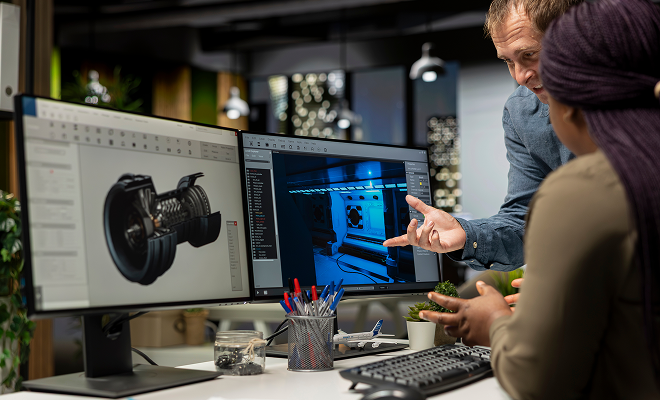
We start with the asset data you already hold: legacy drawings, engineering registers, equipment lists, and any existing 3D model. We digitize what is still on paper or trapped in flat files, assess the quality and coverage of what exists, and identify the gaps between the current state and a twin that can carry live data. The output is a clear picture of the foundation and the work required to make it twin-ready.
Structure the Asset Information Model
We build the asset information model that gives the twin its structure: a master tag register, equipment hierarchy, and the relationships that connect 3D geometry, documents, and engineering data to each physical asset. This is the layer that lets a user click an item in the model and reach everything known about it. Where the 3D model foundation needs to be built or rebuilt, this works alongside Vista’s digital modelling service.
Integrate Live Operational Data
We connect the structured model to live data sources: historians, control systems, and sensor feeds, using APIs, gateways, and platform-native data exchange tools. Every data path is validated against production-representative readings before it goes live, so the twin shows trusted current values rather than stale or mismatched data.
Operationalize and Sustain the Twin
We deliver the twin with documentation, user training, and a model for keeping it current as the asset changes. A twin holds its value only if it stays synchronized with the facility, so we set up the update workflows and remain available to support the twin as new scopes and modifications come through.
What You Gain
- A model that reflects reality, not just the design. Instead of a static 3D model that drifts from the day it was handed over, you get a twin connected to live data that shows the current state of the asset, so teams stop working from outdated drawings.
- Brownfield data turned into an operating asset. Decades of legacy drawings, spreadsheets, and disconnected records become a structured, queryable foundation that feeds the twin, recovering value from data that was previously stranded.
- One queryable source for every team. Engineering, operations, and maintenance reach the same structured asset information through the twin, from design intent to live readings, without hunting across separate systems.
- Faster, safer change planning. Modifications and turnarounds are scoped against real current conditions and accurate as-built information, reducing surprises in the field and rework after the fact.
- Asset information continuity across the lifecycle. The information model behind the twin carries from engineering into operations and through future modifications, so the twin compounds value across the life of the asset rather than degrading after handover.
Faster onboarding and clearer operations decisions. New staff and remote teams navigate the facility through the twin, reaching documents, history, and live status from a single view.
Who This Service Is For
Digital twins deliver the greatest value to owners of complex, long-life assets where the gap between design and live operation carries real cost and risk.
- Oil and Gas.
Midstream and downstream operators who want gas plants, compressor stations, and processing facilities represented as twins connected to historian and control data for unified operations oversight. - Power Generation and Nuclear.
Utilities operating under strict configuration management who need a twin that ties live status back to design intent with full traceability. - Petrochemical.
Process facilities with dense engineering data that benefit from a twin linking P&IDs, 3D geometry, and live process readings in one queryable environment. - Mining and Minerals Processing.
Remote operations connecting fleet, mine planning and scheduling (such as Deswik), control, and process data into a twin for production oversight from a central or remote location. - Energy Storage and Emerging Energy.
Greenfield developers building the asset information foundation of a twin from the first day of engineering, ingesting data from EPC partners as the project takes shape.
How Clients Use This Service
Asset Information Foundation for a Greenfield Twin: Energy Storage Developer
A greenfield energy storage developer needed the asset information foundation of a digital twin built from the start of the project. Vista delivered an integrated environment that consolidated engineering data, 2D drawings, and 3D models into one queryable source of truth, defined the information standards and class library, and configured automated ingestion so data packages from EPC partners flowed into the twin as the project progressed. The result is a structured, living information base ready to connect to operational data at startup.
3D Model Foundation for a Twin: Advanced Reactor Developer
An advanced reactor developer needed an accurate, maintainable 3D model foundation to feed its digital twin. Vista produced and managed the 3D model, including reusable component and support libraries that keep the model consistent and let it scale as the design matures. This engineering-led model foundation is the geometric backbone the twin’s live data and asset information layers attach to.
Operating-Asset Twin Connected to Live Data: Gas Processing Facility
An operating gas processing facility wanted its 3D model and equipment register connected to live historian data so operations and maintenance teams could see current conditions against design within a single twin. Vista structured the asset information, validated the integration to the historian, and delivered a twin that surfaces live readings alongside engineering data and documents.
Why Work With Vista on Digital Twin Creation
Vista Projects has been delivering engineering for industrial facilities for over 40 years, and we have been building data-centricA data-centric outlook is a core concept in digital project execution architecture where data is viewed as the most important and perpetual … digital solutions since 2014. We build twins across the platforms our clients already run rather than pushing a single vendor, and where deep platform certification matters we hold AVEVA Registered System Integrator status for asset information management.
Two differentiators are specific to digital twins:
Asset-information-management depth.
A twin is only as good as the structured data behind it. Vista builds the asset information model, master tag register, and equipment hierarchy that make a twin queryable and durable, not just a model you can spin around on screen.
Engineering-led model accuracy.
The 3D model and engineering data behind our twins are produced by the same engineers who do the underlying design work. The twin reflects real engineering deliverables and as-built conditions, which is what keeps it trustworthy once live data is attached.
Improve your project success with the help of seasoned experts
Tyler Elchuk
Business Development Director
Explore Our Digital Engineering Services
Digital Modelling
Build the accurate 3D model foundation that a digital twin connects live data to.
System Integration
Connect the engineering, historian, and operations systems that feed a twin into a single source of truthSingle source of truth (SSOT) refers to the practice of structuring information models and associated data schema such that every data eleme…
System Simulation
Pair the twin with process simulation tied to live data to test changes before they reach the plant.
Digital Engineering Services
Return to the parent hub page for the full suite of Vista’s digital engineering capabilities
Frequently Asked Questions
A 3D model is a geometric representation of how an asset was designed and built. It is accurate at handover and then drifts as the facility changes. A digital twin is that 3D model and its asset information layer connected to live operational data from sensors, historians, and control systems, so it reflects the current state of the asset and stays useful across its operating life. The model is the foundation; the twin is the model plus structured data plus live connection.
In oil and gas, a digital twinA digital twin is a precise, virtual representation of a physical object system, process, or asset. Digital twins integrate machine learning… connects the 3D model and engineering data of an asset such as a gas plant or compressor station to live historian and control data. Operators use it to see current equipment conditions against design intent, plan turnarounds and modifications against real conditions, and give engineering, operations, and maintenance teams one queryable view of the facility.
Not necessarily. If a usable 3D model exists, Vista connects it to the asset information layer and live data. If it does not, or if it has drifted from current conditions, Vista’s digital modelling service builds or rebuilds the model foundation first. Either way, the twin work includes structuring the asset information that makes the model queryable.
Vista is platform-agnostic. We build twins across 3D model environments, asset information management systems, historians, and operational data platforms such as AVEVA, Autodesk AutoCAD and Plant 3D, Hexagon, Bentley, PI System, Cognite, SAP, Maximo, and custom enterprise data warehouses. We work within your existing software environment or recommend an approach suited to your assets and data architecture.
A twin holds its value only if it stays synchronized with the facility. Vista sets up the update workflows that keep the asset information and 3D model current as modifications come through, and the live data integration keeps operational readings real-time. We also remain available to support the twin as new scopes and changes are introduced.