
Engineering Data Analysis Services for Industrial Facilities

Most industrial facilities sit on twenty years of data they cannot easily use: legacy spreadsheets, scanned PDFs, and figures locked inside disconnected systems. The information exists, but it is hard to trust and harder to query. Vista Projects delivers engineering data analysis services that turn this raw material into structured, validated data your teams can act on. We digitize legacy records, validate them against an engineering data standard, connect them to live operational sources, and surface the result in dashboards built for the questions your engineers and operators actually ask.
What Is Engineering Data Analysis?

Engineering data analysis in an industrial context is the practice of taking raw engineering and operational data, cleaning and structuring it, validating it against a known standard, and then analyzing it to answer real questions about an asset’s design, condition, and performance. It differs from general business analytics because the inputs are technical: equipment registers, instrument indexes, P&ID and datasheet content, historian time series, and maintenance records, much of it trapped in spreadsheets and PDFs.
For industrial owners, the value comes from being able to trust and query data that was previously scattered and unverified. A reliability engineer can compare condition data across a fleet of compressors. A project team can confirm that an incoming data package is complete before accepting it. An operations leader can see plant performance against a target without assembling it by hand.
Vista approaches data analysis as the analytical layer on top of a single-source-of-truth (SSOT) data architecture. We are platform-agnostic by design. Our team works across engineering platforms (such as AVEVA, the AutoCAD Plant 3D toolset, Hexagon, and Bentley), operational platforms (such as PI System and Cognite), enterprise systems (such as SAP and Maximo), and analytics environments (such as Power BI, Snowflake, Databricks, Seeq, and TrendMiner), on-premises or in the cloud.
How We Deliver Data Analysis
Vista’s data analysis approach starts where most industrial data problems actually begin: the legacy spreadsheets, scanned PDFs, and disconnected systems that hold information your teams cannot trust or query. We work forward from that raw material to validated data and usable insight.
Source Assessment and Digitization
We begin by inventorying where your data lives, including legacy spreadsheets, PDF documents, drawings, point historians, and line-of-business systems, and assessing its quality and structure. We then digitize and extract the content that is currently trapped in unstructured formats, so it can be worked with as data rather than as documents. The output is a consolidated, machine-readable dataset and a clear picture of its gaps.
Structuring and Validation
We structure the extracted data against an information-standards model and validate it with automated rules, drawing from established standards such as ISA-95 and ISO 15926 where they apply. Non-conforming records are flagged with quality reporting so the data owner, an EPC partner, or an internal team can correct and resubmit them. Only validated data moves forward into analysis.
Integration and Analysis
We connect the validated dataset to live operational sources, such as historian time series and maintenance records, then build the analysis: trend studies, comparisons across equipment, completeness scoring, and condition or performance views. Analysis is built to answer the specific questions your teams need answered, not generic reports.
Dashboards and Operationalization
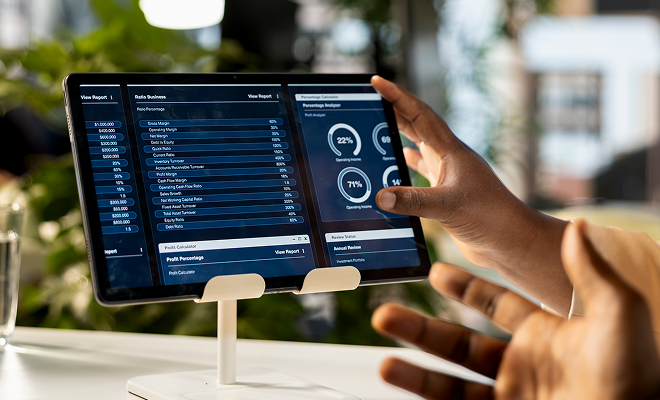
We deliver the result in dashboards built for the intended audience, such as safety-critical-element, production-critical, commissioning, or reliability views, using analytics platforms appropriate to your environment. We provide documentation and training, and remain available as the data and the questions evolve.

What You Gain
- Data you can finally trust and query: Decades of legacy spreadsheets, PDFs, and disconnected records become a single structured, validated dataset, so your teams stop reconciling sources by hand and start asking questions of the data directly.
- Validated data, not just collected data: Automated validation against an engineering data standard catches gaps and errors before they reach a decision, with quality reporting that lets the data owner or EPC partner correct and resubmit non-conforming records.
- Insight tied to the questions your teams ask: Dashboards are built around real operational and engineering questions, such as safety-critical-element status, production-critical performance, commissioning completeness, and equipment condition, rather than generic charts.
- Faster, more confident decisions:Project completeness is measured against the actual data integrated into your systems, not against a separately maintained progress report. Owner oversight becomes a query rather than a meeting.
- A foundation that compounds: Facilities digitizing legacy records and connecting them to live operational data to support capacity, quality, and reliability decisions.
Who This Service Is For
Engineering data analysis delivers the greatest value to industrial owners who have accumulated years of engineering and operational data across multiple systems and need to turn it into something they can trust and act on.
- Oil and Gas
Midstream and downstream operators with historian, ERP, and engineering data spread across sites who need fleet-wide reliability and performance analysis from a validated dataset. - Power Generation and Nuclear
Utilities operating under strict configuration management who need validated, traceable engineering data analysis across long-life assets. - Petrochemical
Complex process facilities with dense datasheet, P&ID, and historian data that must be structured and analyzed for design verification and performance. - Mining and Minerals Processing
Remote operations consolidating fleet, mine planning and scheduling (such as Deswik), control, and maintenance data into unified condition and production analytics, including plan-versus-actual reconciliation. - Industrial Manufacturing
Facilities digitizing legacy records and connecting them to live operational data to support capacity, quality, and reliability decisions.

How Clients Use This Service
Automated Data Validation and Quality Reporting: Energy Storage Developer
A greenfield energy storage developer needed to collect engineering data from multiple EPC partners and be confident it was complete and conforming before accepting it. Vista defined standard data-package formats, built automated validation against an information-standards model, and produced quality reporting so each EPC could correct and resubmit non-conforming data. Vista then delivered analytics dashboards, including safety-critical-element, production-critical, and commissioning views, giving the owner a live picture of data quality and project status.
Structuring Electrical and Instrumentation Data: Advanced Reactor Developer
An advanced reactor developer needed to bring electrical and instrumentation (E&I) engineering data out of sample and source datasets and into a structured engineering environment it could analyze and build on. Vista ingested the source data, mapped it to a structured E&I data model, and validated it so the developer could query and report against a consistent dataset rather than a collection of disconnected source files.
Historian Analytics for an Operating Plant: Midstream Operator
A midstream operator needed to turn years of plant historian data into reliability and performance insight across its rotating equipment, connecting condition and process data to maintenance records for fleet-wide analysis. Vista structured the historian and maintenance data, built the analysis, and delivered operations-facing dashboards for trend and condition monitoring.
Why Work With Vista on Data Analysis
Vista Projects has been delivering engineering for industrial facilities for over 40 years, and we have been building data-centricA data-centric outlook is a core concept in digital project execution architecture where data is viewed as the most important and perpetual … system integration solutions since 2014. We integrate across the platforms our clients already run rather than pushing a single vendor, with production configurations in service at nuclear, energy storage, and advanced reactor clients. Where deep platform certification matters, we hold AVEVA Registered System Integrator status for asset information management.
Two differentiators are specific to data analysis:
Engineering-data validation depth
Our analysis sits on validated data. We build automated validation against engineering data standards, with quality reporting that lets data owners and EPC partners correct and resubmit non-conforming records, so the analysis you act on is built on data you can trust.
Historian and contextualization experience
We connect engineering data to live operational sources, structuring and contextualizing historian time series and maintenance records so condition, performance, and reliability analysis reflects what the plant is actually doing.
Improve your project success with the help of seasoned experts

Tyler Elchuk
Business Development Director
Explore Our Digital Engineering Services
System Integration
Connect engineering, project, and operations data into a single source of truthSingle source of truth (SSOT) refers to the practice of structuring information models and associated data schema such that every data eleme… that feeds your analysis.
Implementation of Advanced Analytics
Extend validated data into predictive and operator-advisory analytics for reliability and performance.
Digital Twin Creation
Build a live, data-connected digital twinA digital twin is a precise, virtual representation of a physical object system, process, or asset. Digital twins integrate machine learning… on the same validated data foundation.
Digital Engineering Services
Return to the parent hub page for the full suite of Vista’s digital engineering capabilities.
Frequently Asked Questions
Engineering data analysis services take raw engineering and operational data, clean and structure it, validate it against a known standard, and analyze it to answer questions about an asset’s design, condition, and performance. Unlike general business analytics, the inputs are technical: equipment registers, instrument indexes, datasheets, historian time series, and maintenance records, often trapped in spreadsheets and PDFs.
Yes. A large part of our work is exactly this. We digitize and extract data trapped in legacy spreadsheets, scanned PDFs, and drawings, structure it against an information-standards model, and validate it, so years of disconnected records become a dataset your teams can trust and query rather than a collection of documents.
Vista is platform-agnostic. We deliver analysis and dashboards using the tools that fit your environment, such as Power BI for dashboards, Snowflake or Databricks for data warehousing, and Seeq or TrendMiner for time-series analytics, alongside historian and engineering platforms such as PI System, Cognite, and AVEVA. We can work within your existing analytics stack or recommend an approach for your data.
Data analysis structures, validates, and analyzes existing data to answer current questions about an asset, such as condition, completeness, and performance. Advanced analytics builds on that foundation with predictive and prescriptive models, such as predictive maintenance and operator advisory. Vista typically delivers data analysis first to establish a trusted dataset, then extends it into advanced analytics where the value is clear.
We validate it. Before any analysis is built, the data is structured against an information-standards model and checked with automated validation rules. Non-conforming records are flagged with quality reporting so they can be corrected and resubmitted. Only validated data moves into the analysis, so the insight your teams act on rests on data you can trust.